Sedgefield Slow Food
The Slow Food Movement encompasses many aspects of food production that one wouldn’t initially associate with such words but they stem from the desire of one man, Carlo Petrini to counteract the demands and knock-on negative consequences of the fast food industry.
He founded the Slow Food Movement in 1986 with aims to encourage people to value their local food traditions enough to perpetuate them and the food culture of their individual regions.
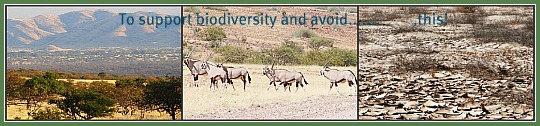
This includes the farming of plants, seeds and livestock that are characteristic of local ecosystems to effectually support and protect their biodiversity.
The Slow Food Movement upholds using organic methods to build resilience to climate change, conserve water and safeguard the legacy of rural knowledge. It promotes humane animal husbandry regarding daily care, feeding methods and slaughtering at abattoirs.
Currently over 300,000 vegetable varieties have become extinct in the last 100 years and 1 more is lost every 6 hours. 33% of cattle, sheep and pig breeds have either disappeared or are close to extinction and 75% of fisheries are on the brink of collapse.
Watch this TED youtube video about an incredible seed storage bank in Norway which is providing the means to safeguard seed varieties from all around the globe to ensure the preservation of biodiversity - Svalbard Global Seed Vault
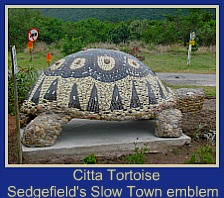
The fundamental principles that Slow Food embraces dovetail with those that endorse the Slow Town philosophy.
|
|
|
The Slow Food Foundation
The Slow Food Foundation for Biodiversity created by Slow Food International of which Carlo Petrini is President, is the technical and operational instrument for implementing projects to protect food products inherent to specific regions that are in danger of being lost to future generations.
The Slow Food Foundation insists that the future lies with small-scale agriculture and its most important initiative is “Terra Madre” that gives voice to small-scale farms and producers. It includes 2000 food communities, 300 academics and 1000 cooks. It acts to encourage and promote sustainable methods of production in harmony with nature, landscape and traditions.
In South Africa a special species of livestock, the Zulu sheep project is registered with them and receives financial assistance and advice from the Foundation.
Slow Food Locally
"Slow food" intimates that it’s grown locally, and organically, using compost and mulch instead of pesticides and fertilizers that promote soil erosion, loss of micronutrients and the destruction of natural plant immunity.
To some extent Slow Food also means eating seasonal produce when its at its peak of nutritional flavour and value unless you bottle (can) your foods or buy frozen. I have found though, that I’m so used to eating fresh (apart from frozen peas) that frozen just can’t compete for taste anymore. I nibble raw florets of broccoli and cauliflower when I’m preparing a meal and carrots are my favourites! It’s just not the same if its frozen!
Slow Food encourages customers to put "local" high on our lists because the beneficiaries of transported and processed foods are not the farmers but the processors, brokers, shippers, supermarkets and oil companies.
Slow Food’s work on preserving agricultural biodiversity and celebrating heritage foods through the Ark of Taste are central to preserving food culture and mitigating global warming.
Slow Food reminds us we are not merely eaters we are co-producers of the food system that feeds communities, supports livelihoods and sustains vital culinary traditions.
From highlighting the plight of farm workers to tackling food waste, Slow Food recognizes—and celebrates—the centrality of food both on and beyond the plate. Simran Sethi .
Pressurising farmers to sell their produce at low profit
margins or even below market prices has the eventual effect of driving
small farmers off their land and increasing the opportunity for
monoculture. This signs the death warrant for our soil, biodiversity and
eventually our planet.
At this point in time, I’m glad I don’t have children who could one day ask me of my generation "what on earth were we thinking?" So there's many good reasons to support our local farmers' market Wild Oats.
Critical Path is the masterwork of a brilliant career more relevant today than when Buckminister Fuller first wrote it in 1980.
Today we find ourselves in the midst of the greatest crises in the history of the human race - political, economic, environmental and ethical. How we respond will determine whether or not humanity survives...
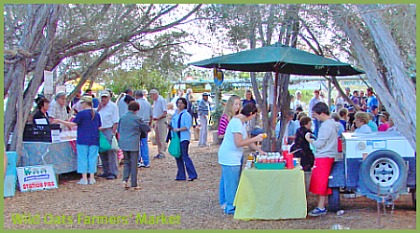 Wild Oats Community Farmers' Market
Every Saturday 7:30-11:30
Engen Garage Turn-off from the N2 on the George side of Sedgefield
Wild Oats Community Farmers' Market
Every Saturday 7:30-11:30
Engen Garage Turn-off from the N2 on the George side of SedgefieldWhy Organic!
Slow Food Ethics insists that the less we interfere with the whole complex soil system the better.
"Slow Food" supports the view that organic farming provides the soil with thousands of micro-organisms that work together synergistically, feeding each other and enriching the earth. Plants are able to absorb the individual nutrients they need for their growth and this soil retains high levels of moisture and thus needs less watering. (That's when carrots help you see and spinach makes you strong - right?)
Crops grown with fertilisers and treated with pesticides, cattle dipped in poisons and injected with hormones, chickens kept in 24 hrs of artificial daylight and treated constantly with antibiotics, (I could go on....) don't provide the nutrients our bodies need to be healthy. Plants are weakened by chemical treatments just as people constantly on antibiotics lose their own natural defences.
We are what we eat and evidence has been mounting for some time now (if we look at medical aid costs and the bed occupancy of hospitals and illnesses such as heart disease, diabetes, obesity and cancers that are affecting even young children) that what we eat isn't doing us any good!
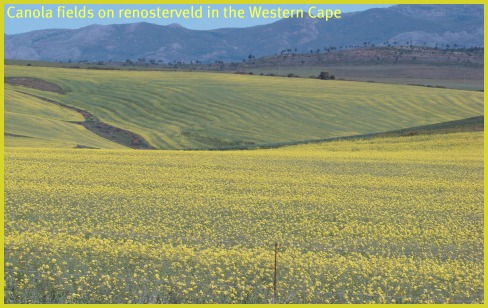
In Turkey 70 million people eat food they grow themselves in communal gardens or small front yards or buy at local farmers' markets. Crop diversity expressed in this way, reduces the risks of wholesale produce loss from pests and disease.
South Africa has a population of 50 million. It is conceivable that we can do this too. We have far more land and less people to feed. We just need a different mind-set and to apply ourselves to the task – in much the same way we tackled the Soccer World Cup with enthusiasm and unshakable commitment! No-one need go hungry and every family could feed itself by being part of a self supplying community.
Living Simply
Simple living endorsed by the Slow Food movement, is characterised by moderately consuming that which is required to sustain life. Frugality is not a popular concept today, but the truth is the less we need, the freer we are! Less is more in the most fundamental way. When we ‘re not restricted by the need to “have” we can enjoy “be” ing. A small adjustment in our thinking allows us to be healthier and happier and would give Mother Nature a chance to recover a level of renewal and sustainability.
In his book “Small is Beautiful“ E.F. Schumacher presents the idea that the world will not be fed until we pursue a lifestyle designed for permanence.
He suggests that “even bigger machines, entailing ever bigger concentrations of economic power and exerting ever greater violence against the environment, do not represent progress.
They are a denial of wisdom. Wisdom demands a new orientation of science and technology towards the organic, the gentle, the non-violent, the elegant and the beautiful.” These sentiments are shared by the Slow Food Movement.
'There is enough in the world for everyone's need but there's not enough for everyone's greed." Mahatma Gandi
To simplify life by getting back to the land and growing one’s own food increases one’s self-sufficiency reducing dependency on money. Two door-sized areas are sufficient to produce a workable vegetable garden for a family. Although a large plot of land will produce more crops, pot gardens, vertical gardens and miniature indoor greenhouses can also provide fresh home grown fruit and vegetables for town and city dwellers.
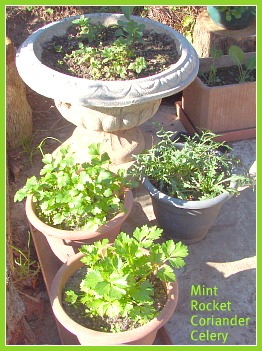
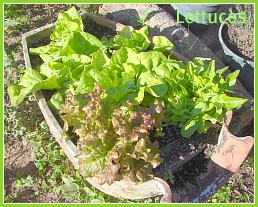
I now have a small garden compared to what I was used to so I let my vegetable plants either grow amongst my flowers and shrubs or in pots. Tomatoes, lettuce, spinach, bean bushes, peppers, strawberries, and several types of herbs all thrive in pots. Seed sprouts are easily grown in glass jars. They are tasty and incredibly nutritious.
I inherited an orange tree when a keen gardening neighbour planted it on our open plot( some years prior to us buying the land and later, building our house). A lemon tree grows in no-man’s land over a fence and in easy reach.
It is very satisfying to be able to pick a good deal of our evening meal’s ingredients out the garden as we need them, benefiting from the freshest most nutritious vegetables ever.
South African Slow Food Recipes
South African potjies are as close as you can get to slow food and it's traditional cooking. In an heavy cast-iron pot, over an open fire, ingredients are added gradually over a number of hours, beginning with the ones that need cooking longest.
First the meat and onions are browned at the bottom of the pot, then stock is added and the meat cooked slowly. Then the vegetables are layered according to the time required to cook them. It can take up to 4 – 6 hours depending on the size of the meal.
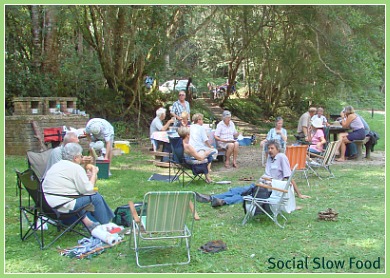
It is regularly a very social affair and families sit around in the outdoors, chatting or playing games, working up an appetite as delicious smells emanate from the pot every time the lid is lifted. It's Slow Food at its yummy best!
An alternative way to cook a potjie when one doesn’t want to sit outside and nurse an open fire is to use a slow cooker. Yet another is to use the Yum Yum eco-friendly hot box. In both instances I fry the onions with a spoon of sugar and brown the meat after that in the same frying pan to seal in the juices.
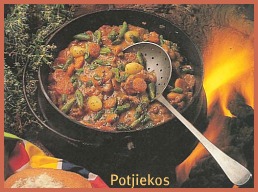
I layer the meat and the vegies into the slow cooker, and rinse out the meat juices in the frying pan with a liter of water containing flavourings, herbs and spices of choice in it so that the meat and vegetables are covered.
The meal can then be left to cook itself. One proviso for the Yum Yum cooker is that the liquid in the pot should be bubbling hot because that initial heat is going to cook the food for the next number of hours. For that reason I would also cut the meat and the vegies into smaller bite sized chunks so that the food cooks through easier.

Links to Related Sites

Eartheasy is about Solutions for Sustainable Living. The best place to start though, is to read this family’s inspiring story of how it all came about.
They discovered a higher quality of life which meant more time with family and friends, a lower cost of living, a toxin-free home and yard, access to wholesome food and safe drinking water, and more time spent in nature. Let them show you how!
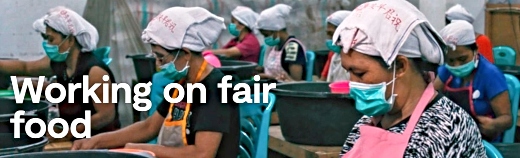
Fair Food is about sustainable Food. This means enabling workers like farmers, fishermen and factory workers at the rock face of food production to earn a decent income so they can adequately provide for themselves and their families. They do this by means of a system called TRACE, a system that is ingenious and workable.